Shopping for a rollator walker for a senior in your life—or maybe for yourself? It can feel like walking into a sea of options, all with different wheels, seats, handles and fancy names. But honestly, you don’t need a PhD in mobility aids to pick the right one. You just need to know what actually matters.
1. Rollator Wheels That Can Actually Roll… Everywhere
Wheels might not sound exciting, but they’re kind of a big deal.
Look for rollators with larger wheels (around 8 inches or more). Bigger wheels roll more smoothly, especially outdoors or over uneven surfaces like sidewalk cracks, carpet, or grass.
Swivel front wheels make turning easier, especially indoors in tight spots like hallways or kitchens.
If the person using it plans to go outside often, consider wheels with a bit of tread—those grip better and feel more stable.

Bottom line: if the wheels are too tiny or stiff, the whole walker becomes a chore to push.
2. Height-Adjustable Walker Handles
Not all seniors are the same height, and neither are rollators. That’s why adjustable handles are a must.
The handles should be easy to raise or lower without tools.
When adjusted right, the user’s elbows should bend just slightly—think 15 degrees—while holding the grips.

Too high and it’s uncomfortable. Too low and it messes with posture. Having the right height can really reduce fatigue and make walking more natural.
3. Comfortable Rollator Seat for Rest Stops
Sometimes, you just need to sit for a minute—and that’s when the built-in seat becomes your best friend.
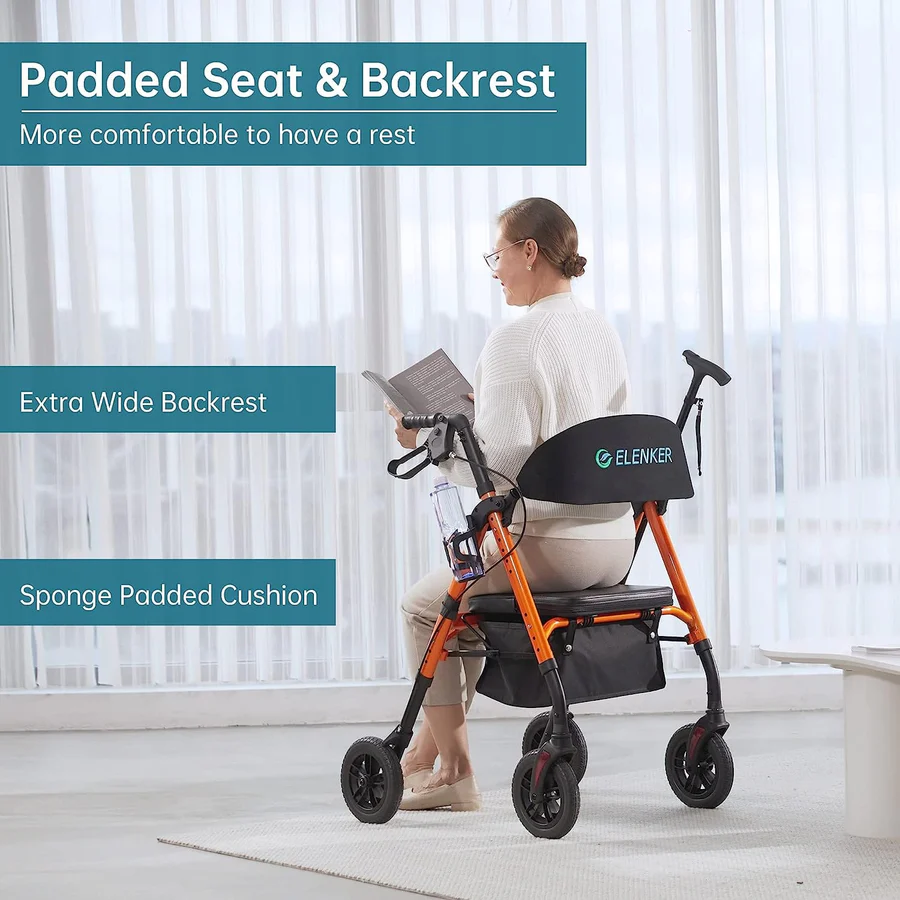
- Look for padded seats, not just hard plastic.
- Some rollators come with a backrest, which adds extra support during breaks.
- Make sure the seat is wide enough and strong enough to support the user’s weight comfortably.
If someone is going to use this rollator for longer walks, errands, or outdoor time, that seat’s going to matter. A lot.

4. Lockable Brakes That Are Easy to Use
You don’t want to fumble with brakes—especially when trying to sit down, park on a hill, or stop suddenly.
- Hand brakes on a rollator should be easy to grip and squeeze.
- Most models let you push down to lock the brakes in place when stopped—like when sitting or parked.
- Test how smooth the brake action is and make sure the user feels confident using them.

Safety first—because no one wants their rollator rolling away while they’re trying to sit.
5. Storage Space for Personal Items
Let’s face it, seniors often carry a few things: keys, glasses, a bottle of water, a little snack, maybe even some shopping. Built-in storage is super handy.
- Look for a bag or basket under the seat or attached to the frame.
- Fabric bags are quieter and lighter, while wire baskets can carry more weight.
- Bonus if the storage is covered or zippered—it keeps stuff from bouncing out.
It’s all about making daily life easier and not having to juggle a purse or shopping bag while walking.
6. Foldability for Travel and Storage
Whether you’re heading to the doctor’s office, going on a trip, or just storing the rollator in the car trunk, foldability matters.
- Most rollators fold in half by pulling up on the seat or frame.
- Make sure it locks in place once folded so it’s not flopping around.
- Some models are narrow enough when folded to fit in a closet or car easily.

This is a big deal for caregivers, too—because no one wants to wrestle with something heavy and awkward every time it needs to go somewhere.
7. Lightweight Yet Durable Frame
Seniors shouldn’t have to push around something that feels like gym equipment.
- Aluminum frames tend to be light but still sturdy.
- Most good rollators weigh between 14–20 pounds. That’s light enough to lift but still solid when walking.
- Check the weight capacity—most support around 250 to 300 pounds.
A rollator should feel solid and stable, but not like a tank. Lightweight and strong is the sweet spot.
8. Good Overall Balance and Stability
You want something that feels stable on the ground, not wobbly.
- Four wheels should always stay grounded—no tipping when you lean or turn.
- The walker shouldn’t feel like it’s dragging to one side.
- If possible, test it on different surfaces: carpet, tile, sidewalk, grass.
Some rollators come with curb assist bars at the back wheels, which help you tilt and lift the front wheels over small steps. It’s a nice extra feature for outdoor use.
9. Style and Appearance Matter Too
Okay, so it’s not all about function—looks count too. Some rollators come in cool colors like blue, red, or metallic finishes. Some even look more like stylish strollers than medical gear.
- If someone feels good using it, they’re more likely to use it regularly.
- No shame in picking one that just looks nice—it’s part of someone’s daily life, after all.
10. Extra Features Worth Considering
You don’t need all the bells and whistles, but here are a few add-ons that can make a difference:
- Cane holder (hands-free carrying)
- Cup holder (for coffee or water bottles)
- Tray attachment (helpful for carrying meals)
- Reflectors or lights (for evening strolls)

Think about what’s realistic for the person using it and how they’ll spend their time with it.
Choosing the right rollator walker isn’t about getting the most expensive model or loading up on features no one will use. It’s about comfort, safety, and ease of use.
Whether it’s a daily walk around the neighborhood, trips to the grocery store, or just moving around the house with confidence, the right rollator can make a big difference in someone’s independence.
Take your time, test it if you can, and most importantly—make sure it fits the person using it. Because when a rollator feels good, everything else just rolls smoother.